On the morning of July 20, 2026, the China -Pakistan Bilateral Strategic Seminar on the Development of the Joint Laboratory on Intelligent Disaster Prevention for Major Infrastructure under the Belt and Road Initiative was held at Southeast University’s Sipailou Campus. The seminar was co-organised by the Joint Laboratory and the Embassy of Pakistan in China, with support from the Seismological Society of Jiangsu Province and Jiangsu Dongnan Special Technology Engineering Co., Ltd. Key representatives from both sides attended, including Mr. Wu Xiaocheng, Party Secretary of Southeast University; Prof. Shahid Munir, Vice-Chancellor of the University of Engineering and Technology, Lahore; Mr. Muhammad Tanveer Piracha, Executive Director of the Institute of Disaster Management, National Disaster Management Authority of Pakistan; and Mr. Khan Muhammad Wazir, Science Counsellor at the Embassy of Pakistan in China. Also present were experts and officials from Pakistani universities and research institutions, the Jiangsu Provincial Department of Science and Technology, the Seismological Society of Jiangsu Province, and relevant departments of Southeast University.
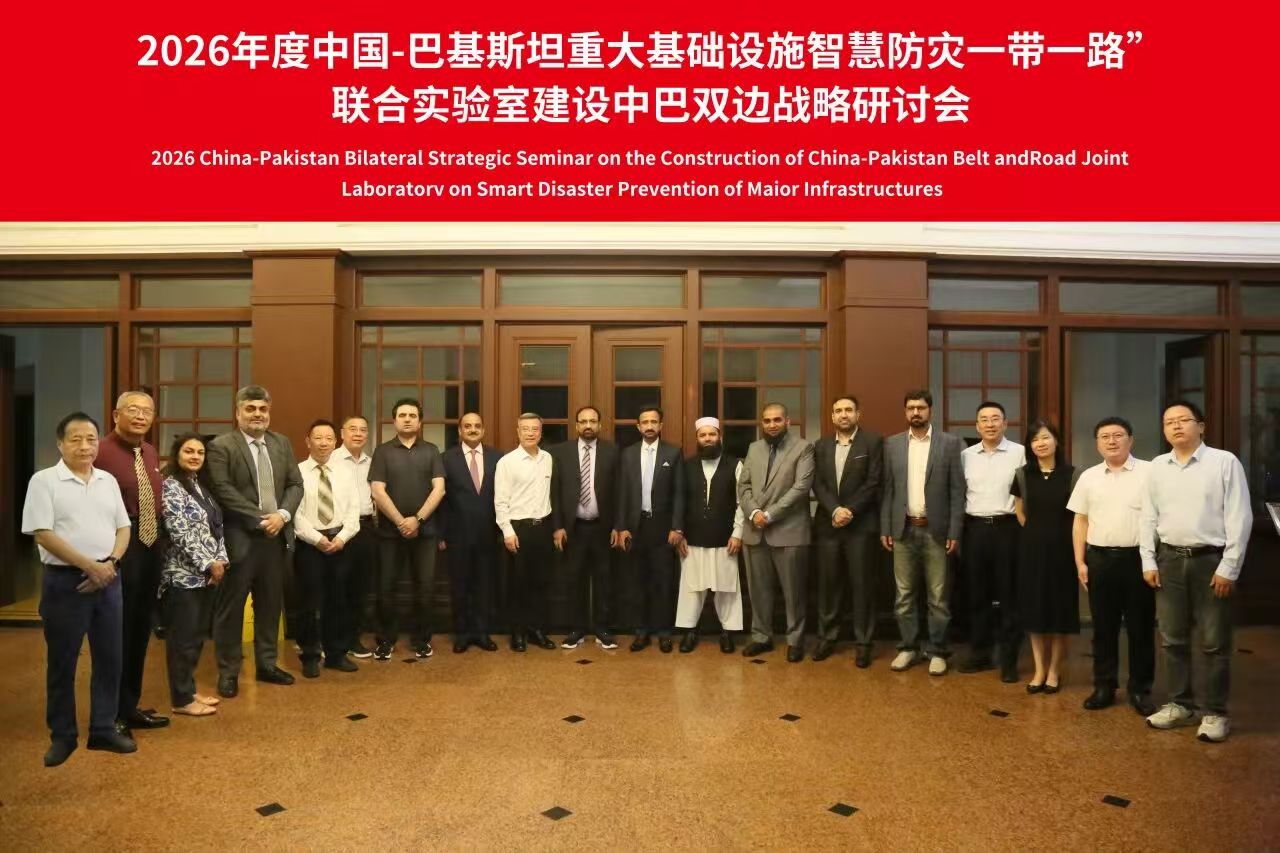
In his address, Mr. Wu Xiaocheng welcomed and thanked all participants and the organizations that have long supported the development of the Laboratory. He noted that the Laboratory has received strong support from both the Chinese and Pakistani governments since its inception, and its progress has been repeatedly included in the agenda of the China–Pakistan Economic Corridor (CPEC) Joint Cooperation Committee’s science and technology working group. Looking ahead, Southeast University will leverage its multidisciplinary strengths to promote deeper integration of disaster prevention engineering with artificial intelligence and big data, intensify joint research on key technologies and their application, and fully support the Laboratory in serving the CPEC and the broader Belt and Road Initiative.
Several Pakistani representatives delivered speeches addressing Pakistan’s disaster management needs, the current state of university research and talent development, and the risk prevention situation in both countries regarding earthquakes and floods. They fully affirmed the Laboratory’s achievements in research collaboration, platform development, and personnel exchange, and called for strengthened research in AI, digital twins, structural health monitoring, early warning systems, and multi-hazard risk prevention, as well as promoting technology localisation and multi-party coordination.
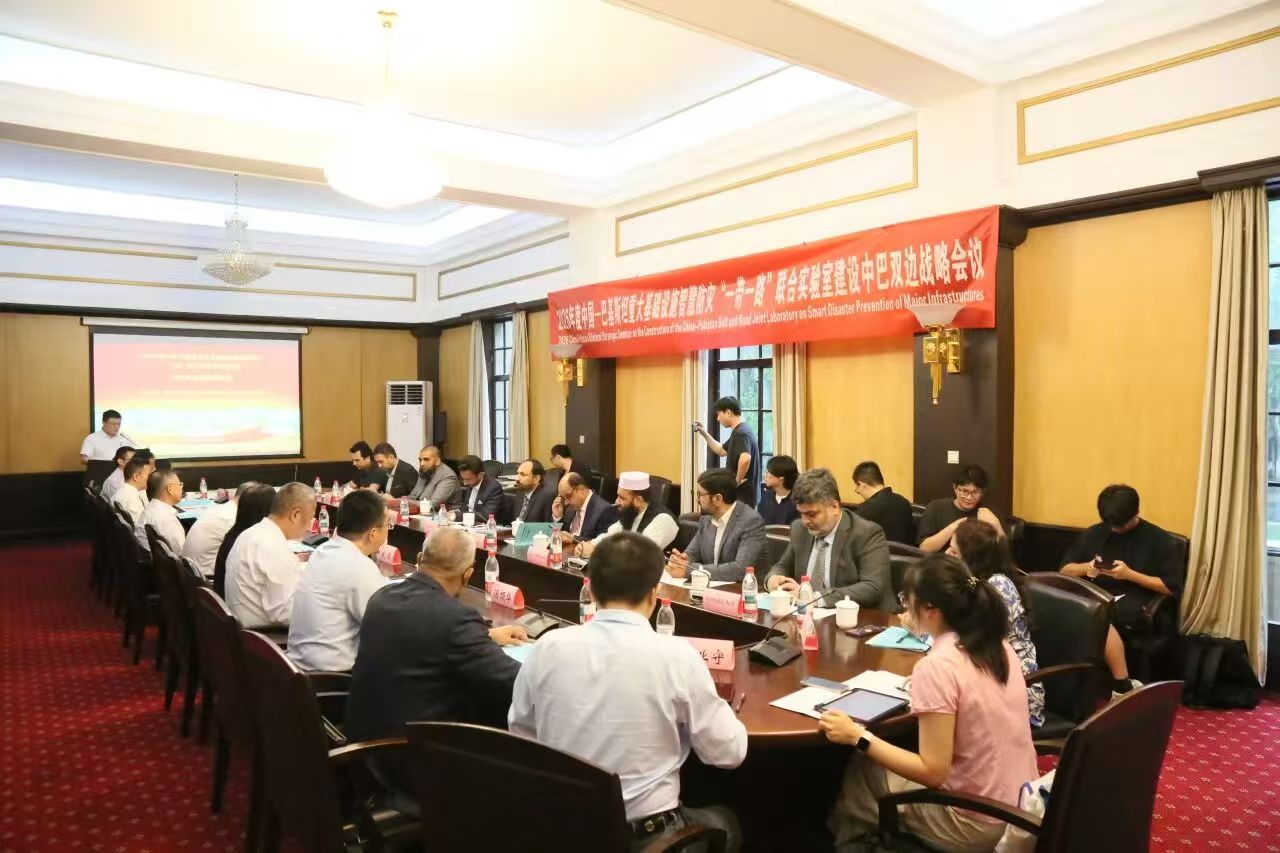
Professor Xu Zhaodong, Director of the Joint Laboratory, presented a work report outlining the Laboratory’s overall structure and recent progress. Currently, the Laboratory has conducted multiple technological research efforts covering earthquakes, strong winds, fires, explosions, and disaster chains, and has established five overseas branch centres in Pakistan. Future efforts will focus on deepening joint research and talent cultivation, and promoting the application of Chinese disaster prevention technologies and standards in Pakistan and other Belt and Road partner countries.
During the afternoon session, representatives from the Pakistani branch centres at partner universities and from Jiangsu Dongnan Special Technology Engineering Co., Ltd. introduced their respective institutional strengths in fields such as earthquake engineering, structural health monitoring, virtual reality and digital twins, big data and AI, mining engineering, and building tilting correction and reinforcement. They also put forward cooperation proposals concerning branch centre development, faculty and student exchanges, joint project applications, talent training, and technology transfer. Following round table discussions, the two sides unanimously adopted a resolution identifying key priority areas for the next phase, including demonstration projects, standard development, core technology research, and talent cultivation.