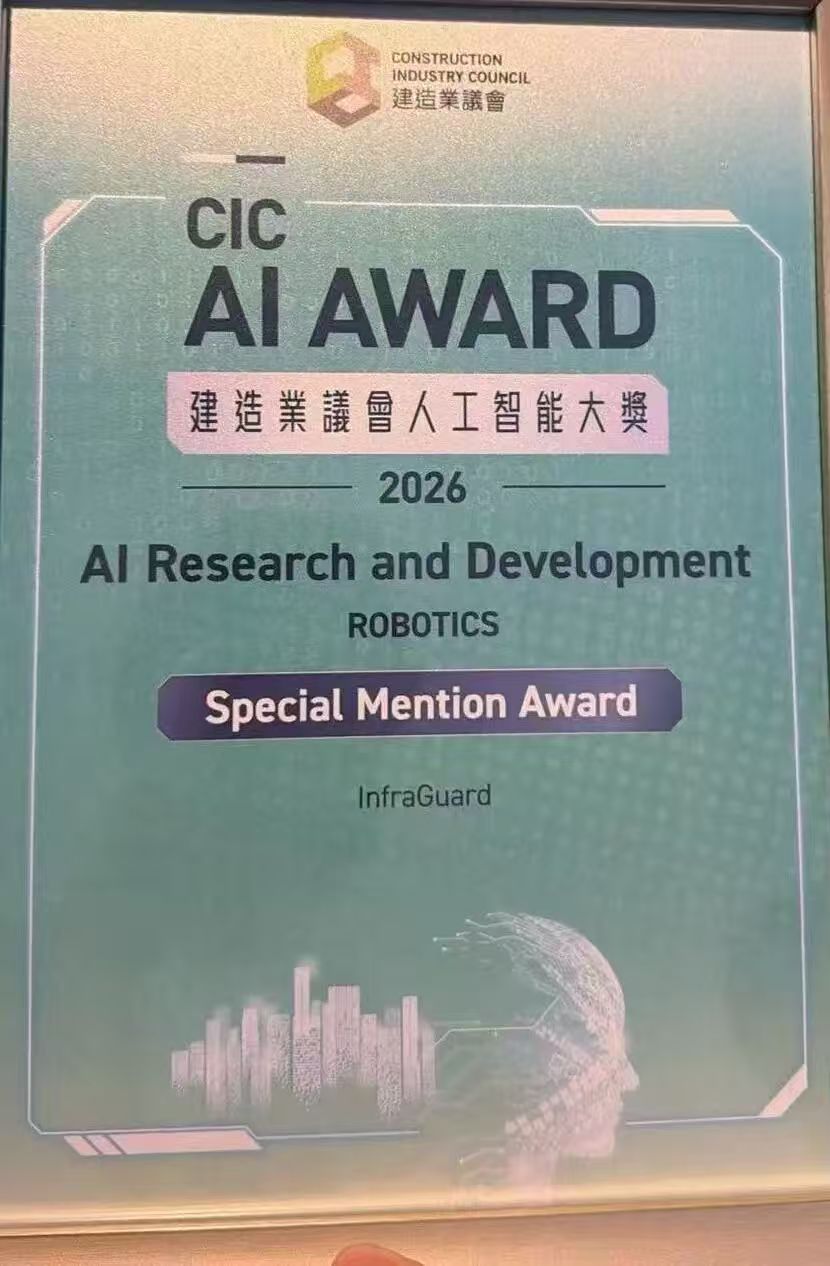
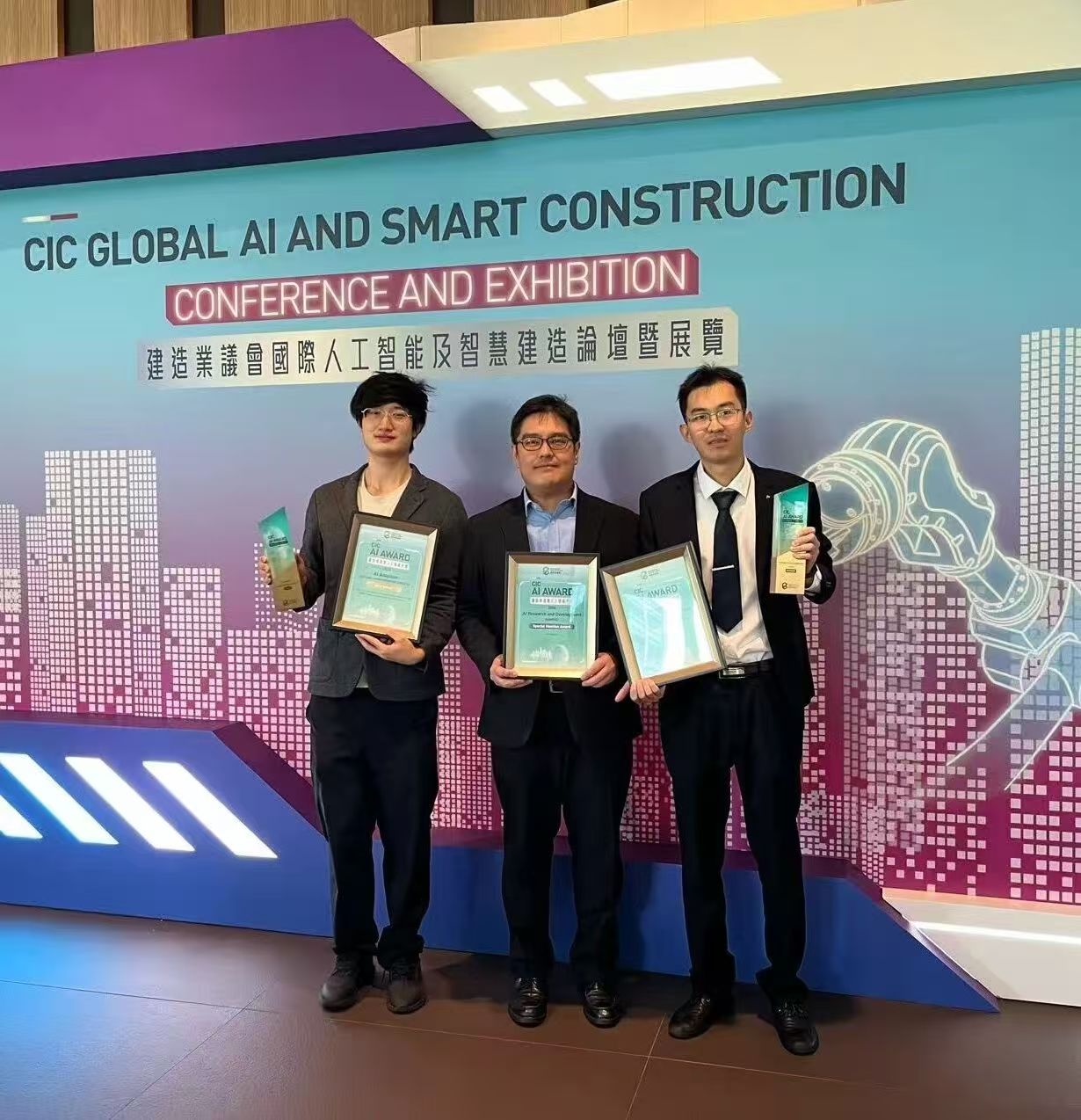
Recently, the first Artificial Intelligence Competition organised by the Construction Industry Council (CIC) of Hong Kong concluded successfully. Focusing on AI innovations in the built environment, the competition attracted over 260 entries, with only more than 30 shortlisted. Our faculty, students, and alumni team delivered an outstanding performance, securing three major awards.
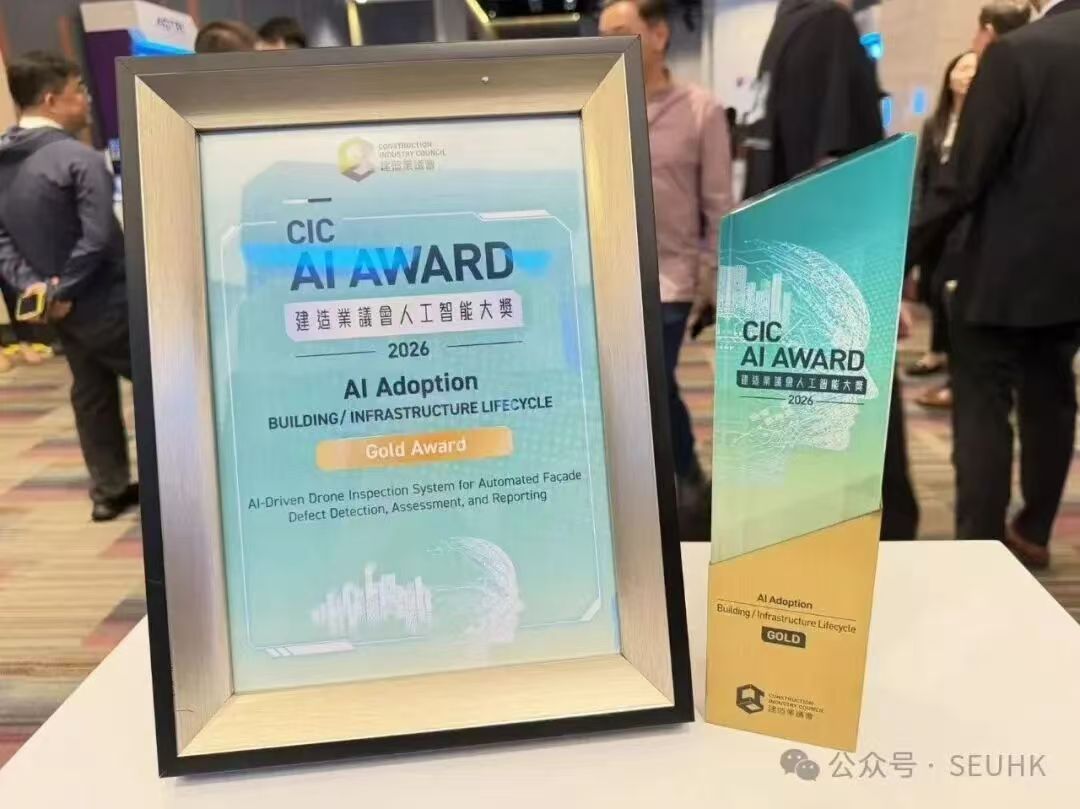
Gold Award
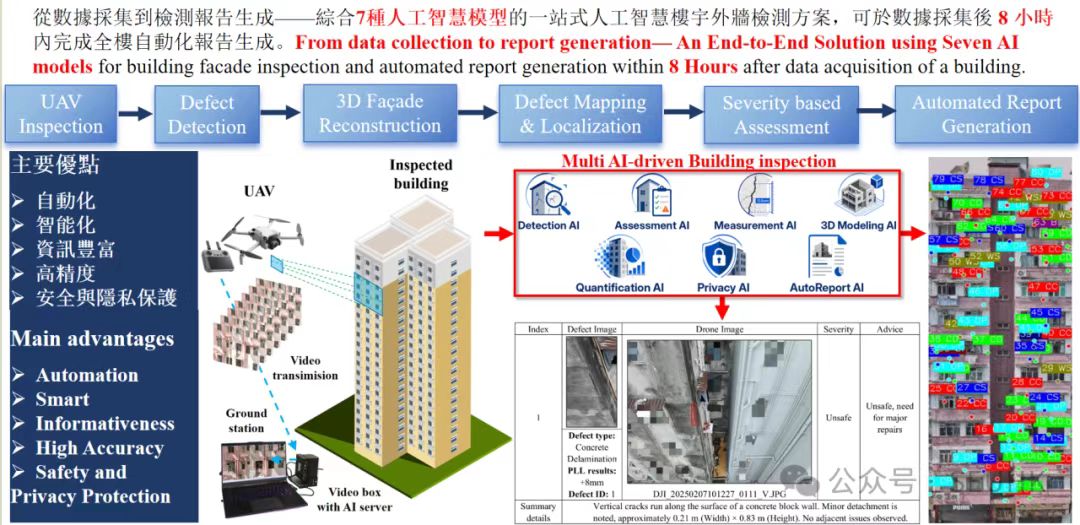
AI-driven Drone Inspection System forAutomated Facade Defect Detection, Assessment, and Reporting, developed with the participation of our 2024 master's graduate Zhang Haowei (now a Ph.D. student at the University of Hong Kong), integrates autonomous drone inspection, deep learning, visual language models, and 3D reconstruction. It enables automatic defect identification, severity assessment, spatial localisation, and report generation for a single building within hours. The system also anonymises sensitive information such as faces and licence plates, significantly improving the safety, efficiency, and traceability of facade inspections.
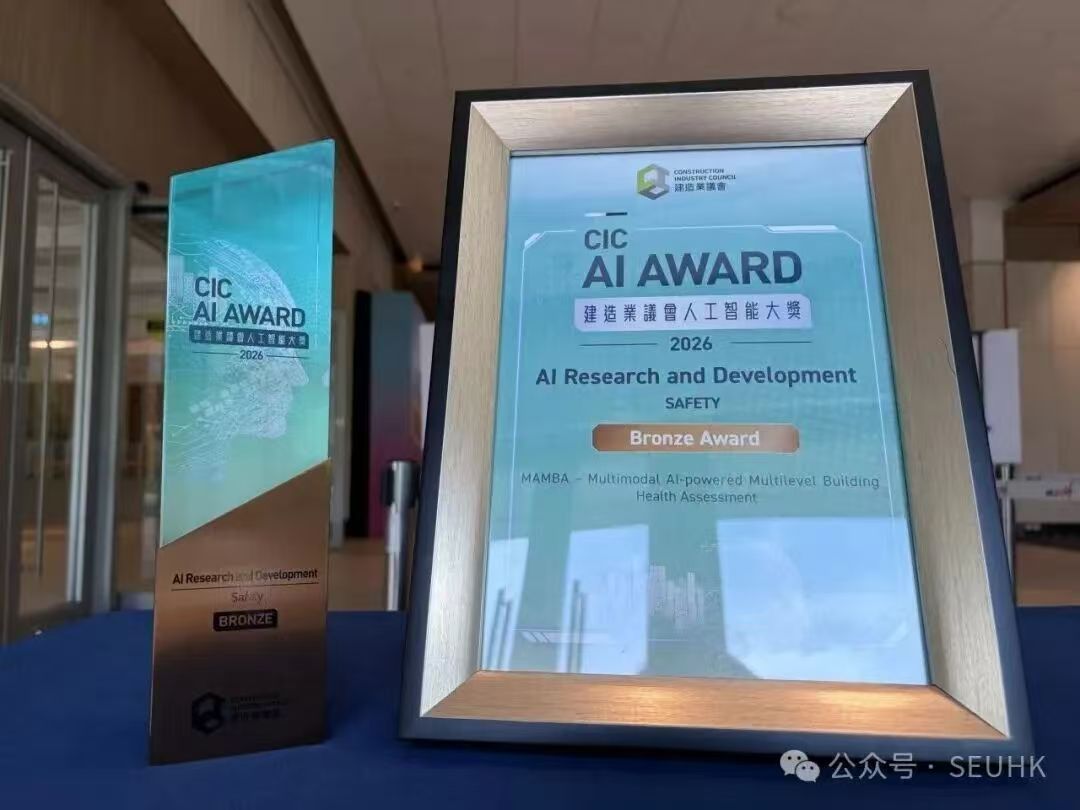
Bronze Award
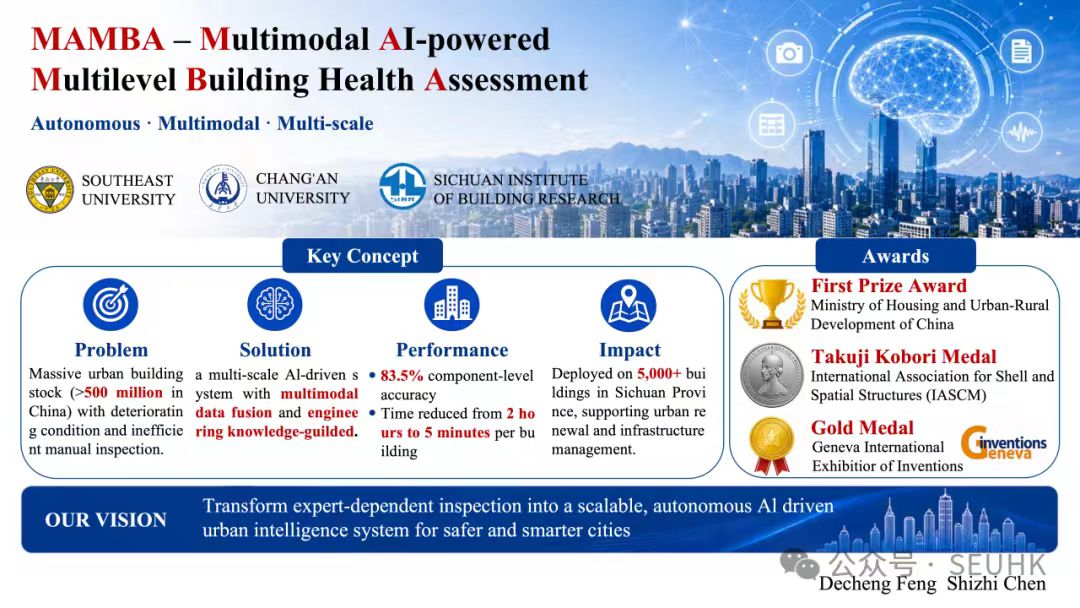
MAMBA - Multimodal AI-powered Multilevel BuildingHealth Assessment, developed by Professor Feng Decheng, a Young Chief Professor ofSCE, fuses multimodal data including site photos, text reports, tabular records, and ground motion. Using a Transformer model for feature extraction and analysis, the technology performs component-level status identification, hazard diagnosis, and rapid city-scale health assessment, reducing evaluation time from hours to minutes. It has been applied to over 5,000 buildings in Sichuan Province, providing intelligent support for urban building safety management, renewal decision-making, and disaster risk prevention.
Special Mention Award
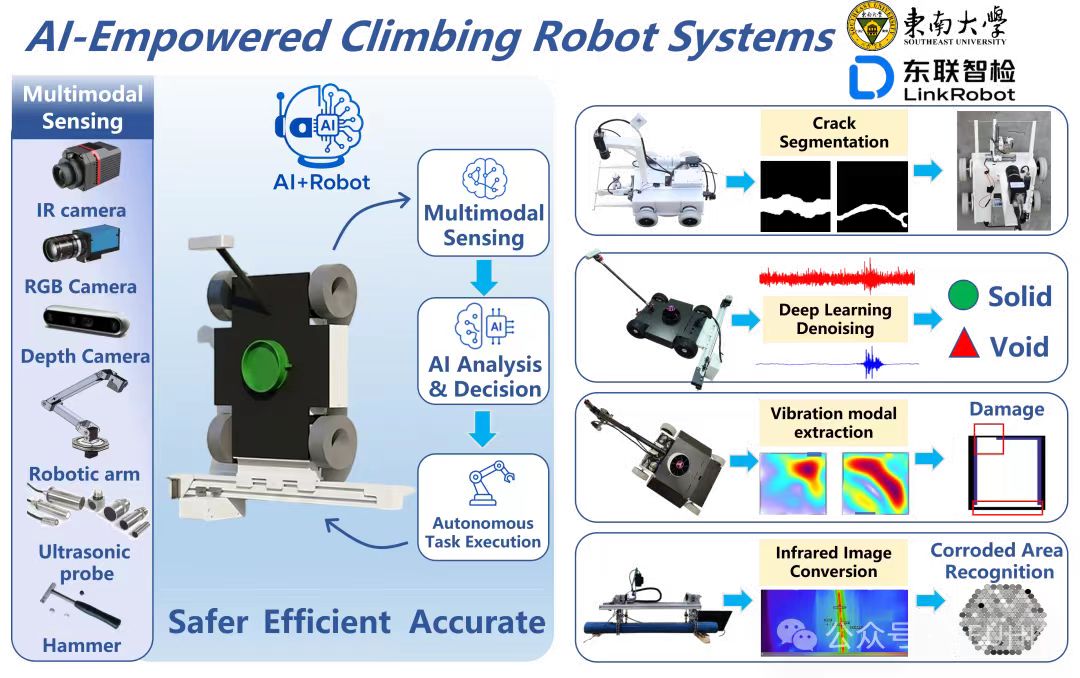
InfraGuard, developed by Professor Gao Kang,also a Young Chief Professor of SCE, is an AI-EmpoweredClimbing Robot Systems. It integrates a wall-climbing mobile platform, multimodal sensing, AI diagnosis, quantitative assessment, and automated operations to establish a closed-loop perception-diagnosis-decision-execution maintenance model. The system advances infrastructure inspection from experience-driven to data-driven approaches, and from single-point to continuous, standardised, and intelligent maintenance, offering smart equipment support for safety management and preventive maintenance of urban facilities such as buildings, bridges, tunnels, and curtain walls.